Watercolor Valentine Woman Clipart: An Embroidery Review
As a designer who has digitized and stitched out thousands of files, I approach free design assets with a healthy dose of skepticism. When I first downloaded the Watercolor Valentine Woman Clipart from the Freebies category, my immediate question wasn't about its aesthetic appeal—it was about its structural integrity on fabric. Digital art translates beautifully on a screen, but embroidery is a physical medium with strict rules regarding tension, density, and fabric interaction. After reviewing this design specifically for real-world application in a small business or hobbyist setting, I have some practical insights for makers considering this piece for their next project.
First Impressions and Visual Translation
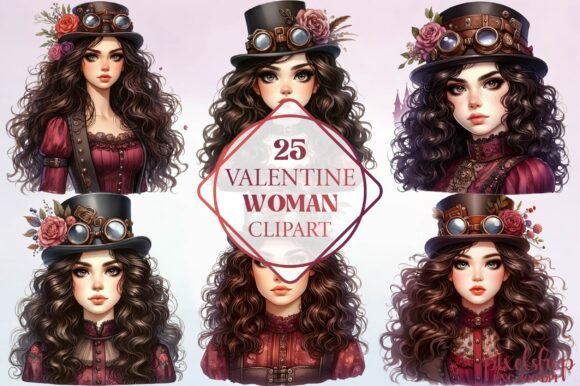
The Watercolor Valentine Woman Clipart carries a distinct romantic, vintage mood that feels softer than typical holiday graphics. The visual personality leans towards feminine nostalgia rather than bold, cartoonish celebration. For an embroidery designer, this presents both an opportunity and a challenge. The soft edges and gradient effects inherent in watercolor styles require careful digitizing to avoid a muddy appearance when stitched. In my assessment, this design avoids the common pitfall of excessive underlay that makes floral or portrait designs feel like bulletproof vests. Instead, it maintains a lightness that suggests it will drape well on garments rather than distorting them.
However, because this is a clipart source rather than a pre-digitized machine embroidery design, you must evaluate the line work critically. Watercolor boundaries are often diffuse. If you are tracing this for satin stitch borders or fill stitch areas, you will need to make decisive choices about where the "edge" actually exists. Ambiguity in digital art becomes glaringly obvious as jumping stitches or uneven registration in the hoop. The design’s layout is balanced enough to serve as a standalone centerpiece, but the intricate details in the woman’s features and hair will demand high-quality digitizing software and patience to translate effectively into thread.
Real-World Application: The Sweatshirt Test
To truly evaluate this asset, I mentally placed it in a specific production scenario: creating a custom embroidered sweatshirt for an Etsy shop's Valentine’s Day collection. Sweatshirts are a staple for handmade sellers, but fleece and French terry fabrics are unforgiving. They have texture and stretch that can swallow fine details. In this context, the Watercolor Valentine Woman Clipart performs best when treated as a stylized interpretation rather than a photorealistic reproduction.
If I were producing this finished product, I would likely simplify the internal shading. Attempting to replicate every watercolor wash with complex fill stitches on fleece often results in thread breaks and poor coverage. Instead, I would use the clipart as a guide for broader color blocks, utilizing blending techniques or variegated thread colors to mimic the watercolor effect without over-densifying the file. This approach preserves the garment's softness and ensures the design remains comfortable against the skin. For a tote bag design or kitchen towel, where the fabric is woven and stable, you could afford to be more detailed, capturing the delicate nature of the original artwork with greater fidelity.
Navigating Fabric Limitations and Hoop Constraints
While the aesthetic is versatile, there are specific environments where this design requires caution. Small hoop sizes are the primary enemy of watercolor-style portraits. Reducing this design below 4x4 inches risks losing the facial definition and the subtle expression that gives the piece its charm. Tiny lettering or minute decorative accents within the clipart may turn into illegible blobs if scaled down too aggressively. Always confirm your minimum viable size before committing to a production run.
Fabric texture also dictates success. On dark fabrics, the light, ethereal quality of watercolor can get lost unless you employ significant contrast or a white underlay base, which adds stiffness. Stretchy fabrics like jersey knits require a robust stabilizer strategy; otherwise, the organic curves of the woman’s silhouette may warp during stitching. I would advise against using this specific design on curved surfaces like caps unless you have advanced digitizing skills to compensate for the cap's push-and-pull distortion. The vertical orientation of many portrait-style cliparts simply does not map well to the limited, curved canvas of a hat front without significant redesign.
Commercial Viability and Customer Perception
For Etsy sellers and creative entrepreneurs, the value of any design asset lies in its ability to convert viewers into buyers. The Watercolor Valentine Woman Clipart scores high on giftability and emotional resonance, which drives sales for personalized gifts and holiday embroidery. However, professional presentation is non-negotiable. Customers trust shops that show crisp, clean stitch-outs. If your digitization of this clipart results in gapping between outlines and fills, or if the thread colors look muddy, it devalues your entire brand.
This design works exceptionally well for printable mockups and digital product previews because of its inherent artistic style. Even before stitching, it looks intentional and curated. But remember that commercial embroidery demands consistency. If you plan to offer this across multiple products—from baby embroidery onesies to adult apparel—you must test how the design scales. A design that looks elegant on a sweatshirt might look overwhelming on a baby bib, or conversely, too sparse on a large pillow cover. Brand consistency means adapting the design responsibly for each substrate while maintaining the core visual identity.
Critical Designer Notes Before You Stitch
Before loading this file into your machine or listing a finished product, adhere to these practical checkpoints:
- Verify Licensing Terms: Just because a file is listed under Freebies does not automatically grant commercial rights for selling finished products or distributing the digital embroidery file. Check the specific license included with the download to protect your craft business.
- Test on Scrap Fabric First: Never run a new digitization directly onto a sellable item. Test stitch density, thread color contrast, and stabilizer choice on a scrap of the exact fabric you intend to use.
- Evaluate Stabilizer Needs: Watercolor styles often involve varying densities. Use appropriate cut-away or tear-away stabilizer based on the fabric weight to prevent puckering around the detailed edges.
- Check Thread Color Contrast: Review your palette in natural lighting. Watercolor relies on subtle shifts; ensure your thread colors provide enough differentiation so the design reads clearly from a distance.
- Inspect Small Details: Zoom in on your digitizing software. Ensure running stitches aren't too short (causing needle breaks) and satin stitches aren't too wide (causing looping).
- Mockup in Black and White: Viewing the design in grayscale helps identify value contrast issues that color might mask. If the design looks flat in B&W, it needs more textural variation in the stitch file.
The Watercolor Valentine Woman Clipart is a beautiful starting point for makers who understand the translation process from pixel to stitch. It offers a sophisticated alternative to generic holiday motifs, perfect for those looking to elevate their handmade products. By respecting the technical limitations of embroidery and approaching the digitizing process with intention, you can transform this lovely digital asset into a tangible, cherished keepsake that resonates with customers and recipients alike. Always prioritize the integrity of the stitch-out over the speed of production; your reputation as a maker depends on that balance.