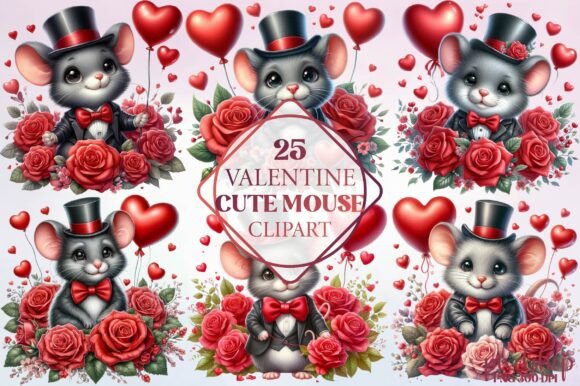
Watercolor Valentine Cute Mouse Clipart Review
As a designer who spends more time behind an embroidery machine than a computer screen, I approach digital assets with a healthy dose of skepticism. When I first opened the Watercolor Valentine Cute Mouse Clipart, my immediate thought wasn't about how pretty it looked on my monitor, but how it would translate through a needle and thread. For those of us running a craft business or managing an Etsy shop, the gap between digital art and stitched reality is where profit margins live or die. This review evaluates this specific clipart not just as a graphic, but as a potential foundation for a viable embroidery project.
First Impressions: Soft Aesthetics vs. Stitch Reality
The visual personality of this Watercolor Valentine Cute Mouse Clipart is undeniably sweet. It carries that nostalgic, storybook quality that performs exceptionally well in the current market for nursery decor and sentimental gifts. The watercolor edges are soft and diffused, creating a romantic mood that screams "Valentine’s Day" without being garish. However, from a digitizing perspective, soft edges are a double-edged sword.
In a raster image, watercolor bleeds beautifully. In a machine embroidery design, we have to decide whether to mimic that bleed with complex fill stitch gradients or to define the shape with a clean outline. If you are using this clipart as a base for digitizing your own embroidery file, pay close attention to the contrast between the mouse’s fur and the background elements. Low-contrast watercolor textures can turn into a muddy mess of thread if the stitch density isn't managed correctly. The charm here lies in the delicate balance; too much coverage makes it stiff, while too little loses the definition of the cute mouse character.
Real-World Application: The Baby Sweatshirt Test
To truly evaluate this asset, I mentally placed it in a real-life production scenario: a custom embroidered baby sweatshirt for a Valentine’s photo shoot. This is a high-stakes personalized gift category where customers expect boutique quality. The Watercolor Valentine Cute Mouse Clipart fits the aesthetic perfectly for this demographic, but the execution requires planning.
For a sweatshirt embroidery project, the fabric texture is key. Fleece and french terry have a pile that can swallow fine details. If I were digitizing this clipart for a toddler's sweatshirt, I would avoid tiny running stitch details for the facial features. Instead, I’d opt for slightly bolder outlines or even consider converting parts of the design into an applique design to reduce stitch count and add tactile interest. The watercolor effect could be achieved through variegated threads rather than dense color blending, which keeps the garment soft and wearable.
This specific use case also highlights the importance of scale. On a baby garment, the design area is limited. You must verify that the Watercolor Valentine Cute Mouse Clipart retains its readability when scaled down to fit a 4x4 hoop size. If the original artwork has intricate brush strokes that disappear at two inches wide, it may need simplification before it becomes a functional digital embroidery file.
Navigating Fabric Challenges and Stabilizer Choices
While this clipart suggests a gentle, lightweight feel, your choice of substrate dictates your success. I’ve seen similar watercolor-style designs fail spectacularly on stretchy knits because the digitizer didn't account for fabric push-and-pull. When adapting Watercolor Valentine Cute Mouse Clipart for apparel, proper stabilizer selection is non-negotiable.
- Stretchy Fabrics: Use a cut-away stabilizer to prevent the watercolor shading from distorting after washing. The organic shapes of the mouse rely on accurate registration; if the fabric shifts, the illusion breaks.
- Textured Linens: Ideal for tea towels or pillow covers. Here, you can afford higher stitch density to simulate the paint texture, but ensure you use a topping to prevent stitches from sinking into the weave.
- Dark Fabrics: Watercolor art is typically designed for white or light backgrounds. If stitching this on a dark custom apparel item, you will likely need to add a white underlay or modify the color palette entirely to maintain visibility.
Be particularly cautious if attempting this on curved surfaces like caps. The complex shading often found in watercolor clipart rarely digitizes well for structured hats unless significantly simplified. For caps, focus on the silhouette of the mouse rather than the painterly details.
Commercial Viability for Makers and Sellers
For the Etsy seller or small shop owner, time is money. One of the biggest advantages of utilizing high-quality clipart like this is the speed of product development. However, you must distinguish between using the clipart for printable mockup listings and actual stitched goods. The Watercolor Valentine Cute Mouse Clipart serves as excellent marketing material; it allows you to showcase the "vibe" of a collection before you’ve spent hours digitizing.
When selling finished products derived from this art, customer trust hinges on consistency. If your listing photo uses the pristine digital clipart but the received handmade product looks blocky or thread-bare due to poor digitizing, reviews will suffer. Always photograph the actual stitched sample. Furthermore, clarify your licensing. Just because a file is listed under Freebies doesn't automatically grant commercial rights for mass-produced small shop product lines. Verify whether you can sell the physical embroidered items, the digitized files, or both. Respecting these terms protects your business reputation and supports the original artists.
Designer Notes: Before You Hoop Up
Before committing this design to a final holiday embroidery run or adding it to your permanent catalog of design assets, run through this practical checklist. These steps save wasted blanks and frustration:
- Test on Scrap Fabric First: Never assume settings transfer perfectly between cotton, fleece, and denim. Stitch out the Watercolor Valentine Cute Mouse Clipart on the exact material you intend to sell.
- Check Thread Color Contrast: Watercolor palettes can be subtle. Ensure your thread colors have enough variance so the mouse doesn't blend into itself. Sometimes increasing saturation in the digitizing software is necessary for thread.
- Inspect Small Details: Zoom in on the digitized file. Are the eyes distinct? Is the heart clearly defined? If details are smaller than 1mm, they may not stitch cleanly. Simplify ruthlessly.
- Black and White Mockup Test: Convert your preview to grayscale. If the design reads well without color, the values are strong enough for embroidery. If it turns into a gray blob, adjust your density maps.
- Wash Test: Watercolor effects often rely on loose stitching or lighter coverage. Wash your test swatch to ensure the design holds up to laundering, especially for baby embroidery or kitchen linens.
Final Thoughts on Value and Versatility
The Watercolor Valentine Cute Mouse Clipart offers a wonderful starting point for seasonal collections, provided it is treated with technical respect. Its strength lies in its emotional resonance—it feels handmade, vintage, and thoughtful. Whether you are creating a tote bag design for a craft fair or a bespoke embroidered patch for a boutique brand, this imagery connects with buyers looking for warmth over perfection.
Remember that as a professional maker, your value isn't just in the image you choose, but in how you engineer it for longevity and beauty. By understanding the interplay between this specific watercolor aesthetic and the mechanical realities of commercial embroidery, you transform a simple digital freebie into a premium finished product that customers will cherish long past Valentine’s Day. Always prioritize the stitch-out over the screen view, and let the fabric guide your final design decisions.