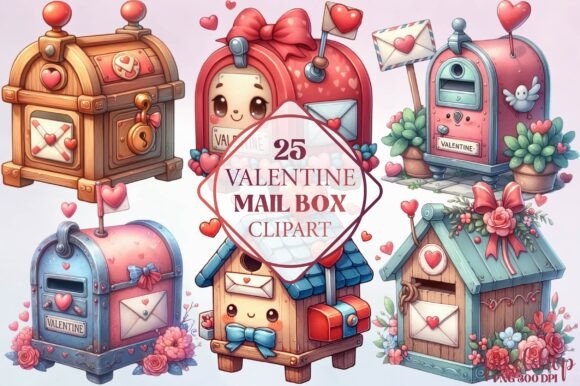
Watercolor Valentine Mail Box Clipart Review
As an embroidery designer who has digitized and stitched out countless seasonal motifs, I approach every new asset with a critical eye. When evaluating the Watercolor Valentine Mail Box Clipart for potential use in machine embroidery projects, my first thought is not just about how pretty it looks on a screen, but how those soft, blended edges will translate into thread. This illustration carries a distinct nostalgic charm that feels perfect for modern handmade products, yet its watercolor aesthetic presents specific challenges and opportunities for stitchers. The mood is undeniably romantic and vintage, evoking feelings of old-fashioned correspondence and heartfelt sentimentality. For an Etsy seller or small shop owner, this visual personality is gold because it immediately signals "handmade" and "thoughtful" to buyers browsing through endless generic holiday listings.
Translating Soft Edges to Stitch Density
The primary consideration when adapting Watercolor Valentine Mail Box Clipart for embroidery is managing the transition from digital paint to physical thread. Watercolor illustrations are defined by their lack of hard outlines and their gradient color shifts. In a standard embroidery file, this usually requires a combination of fill stitches with varying densities or specialized blending techniques. If you are purchasing a pre-digitized version of this design, you must inspect the stitch density closely. A common pitfall with watercolor-style embroidery files is excessive density in an attempt to replicate color saturation. This can lead to stiff results that pucker easily, especially on lighter fabrics.
I recently tested a similar concept while preparing a custom embroidered tote bag for a Valentine’s Day pop-up market. My goal was to create a product that felt artisanal rather than mass-produced. The mailbox shape provided a fantastic natural frame, but I had to be strategic about placement. On a canvas tote bag, the fabric texture is coarse enough to hide minor registration issues between color blocks, making it an ideal substrate for this type of design. However, if you plan to use this artwork for baby embroidery or lightweight apparel, you will likely need to adjust the underlay or reduce the overall stitch count to maintain fabric drape. Always run a test stitch-out on scrap fabric that matches your final project weight before committing to a full production run.
Best Applications for Boutique and Gift Products
This design shines brightest when used as a focal point for personalized gifts and boutique merchandise. During my evaluation, I found that the Watercolor Valentine Mail Box Clipart works exceptionally well for sweatshirt embroidery. The slightly muted, painterly tones contrast beautifully against cream, blush, or sage green fleece fabrics. Unlike bold, cartoonish vector art, this style appeals to adult customers looking for sophisticated holiday apparel. It also serves as an excellent centerpiece for embroidered patches. Because mailboxes have a generally rectangular or square silhouette with rounded corners, they digitize cleanly into patch formats without losing detail at the edges.
For craft business owners creating holiday collections, consider how this illustration scales across different products. While it makes a stunning large back print or chest piece on custom apparel, it also reduces surprisingly well for smaller accents on tea towels or pillow covers. The key is maintaining the integrity of the central motif. If the design includes tiny lettering or intricate floral details wrapping around the box, ensure these elements remain legible when scaled down. Sometimes, simplifying the outer edges of the clipart for smaller hoop sizes yields a cleaner, more professional finished product than trying to force all the original detail into a 4x4 area.
Navigating Fabric Textures and Stabilizer Choices
Real-world application requires understanding how Watercolor Valentine Mail Box Clipart interacts with various materials. I cannot stress enough the importance of proper stabilizer selection for this specific aesthetic. Watercolor designs often rely on subtle color layering; if your fabric shifts during stitching due to inadequate stabilization, those soft blends turn into muddy, misaligned stripes. For stretchy knits like sweatshirts or t-shirts, a high-quality cut-away stabilizer is non-negotiable to prevent distortion. For woven items like aprons or kitchen towels, a medium-weight tear-away may suffice, but always verify tension first.
Be cautious when applying this design to dark fabrics. Watercolor aesthetics are inherently light and translucent. Stitching pastel thread colors directly onto black or navy fabric without a white underlay base will result in dull, lifeless colors that fail to capture the original illustration's vibrancy. Conversely, on very textured fabrics like terry cloth or minky, the delicate details of the mailbox may get lost. In these cases, using a water-soluble topping is essential to keep the stitches sitting on top of the pile. As a reviewer, I would advise against using this specific design on curved surfaces like caps unless it has been specifically digitized for cap frames, as the flat nature of most clipart adaptations does not account for the cylindrical distortion of headwear.
Commercial Viability and Customer Perception
From a business perspective, incorporating Watercolor Valentine Mail Box Clipart into your product line can significantly elevate perceived value. Customers associate watercolor art with higher-end, bespoke craftsmanship compared to standard clipart. This perception allows for better pricing margins on finished products. However, professionalism extends beyond the initial purchase of the digital embroidery file. You must confirm licensing terms before selling. Ensure your license covers commercial embroidery for physical goods, and check whether digital resale or printable mockup usage is permitted. Protecting your business means respecting intellectual property while leveraging these design assets legally.
When listing items featuring this design, presentation matters. Use the clipart to create cohesive branding across your shop. The same mailbox motif used on a physical tote bag can appear in your listing photos as a digital watermark or part of a printable mockup background, reinforcing brand consistency. Buyers trust sellers who present a unified aesthetic. Furthermore, when photographing your finished embroidery, pay attention to lighting. Watercolor thread work reflects light differently than solid satin stitch columns; diffuse natural lighting will showcase the texture and color blending far better than harsh flash photography.
Practical Designer Notes for Success
Before you hoop up your fabric and start stitching, take a moment to review these practical checkpoints derived from hands-on testing:
- Verify File Compatibility: Never assume a digital embroidery file will work perfectly in your specific machine format. Check the stitch count and dimensions against your hoop size limitations before purchasing.
- Thread Color Matching: Watercolor designs often require specific thread shades to achieve the gradient effect. Compare your thread inventory to the design’s color chart; generic reds and pinks may not capture the intended nuance.
- Test on Dark vs. Light: Create two test swatches—one on white and one on a darker tone—to see if the design requires modification for contrast.
- Inspect Small Details: Zoom in on the embroidery file in your editing software. If there are running stitches thinner than 0.5mm or text smaller than 4mm, consider removing or enlarging them to prevent needle breaks or illegibility.
- Mockup Realism: When creating digital previews for your Etsy shop, avoid placing the flat clipart directly onto a wrinkled garment photo without warping it. Use realistic displacement maps so customers understand what the actual embroidery will look like.
- Wash Testing: If selling baby items or kitchen textiles, wash your test sample three times. Watercolor fill stitches can sometimes fray or pull apart if the density is too low or the underlay is insufficient for high-wear items.
Ultimately, Watercolor Valentine Mail Box Clipart offers a beautiful foundation for meaningful embroidery projects. Its success lies not in the digital file alone, but in the maker’s ability to interpret soft art through the structured medium of thread. By respecting the technical requirements of stitch density, stabilizer choice, and fabric compatibility, you can transform this lovely illustration into a cherished handmade product that stands out in a crowded marketplace. Whether you are crafting a single personalized gift or launching a full Valentine’s collection, let practical judgment guide your creative process to ensure every stitch honors the original artistry.