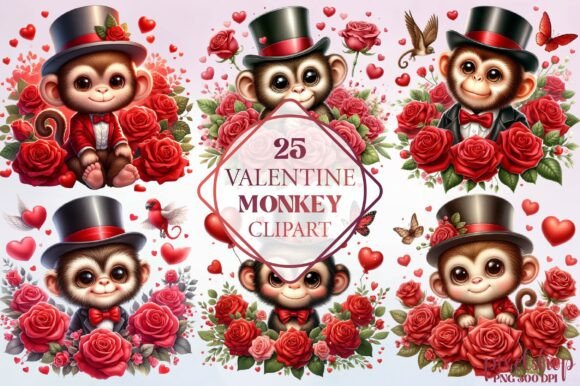
Watercolor Valentine Monkey Clipart Review
As a designer who spends more time behind an embroidery machine than a computer screen, I approach digital assets with a healthy dose of skepticism. Beautiful screen graphics do not always translate to beautiful stitching. When I first opened the Watercolor Valentine Monkey Clipart, my immediate reaction was one of cautious optimism. The illustration possesses a soft, whimsical charm that is currently dominating the handmade market, but as an embroidery professional, I had to look past the pixels to evaluate how this artwork would survive the transition from digital file to threaded reality.
This review is not about the aesthetic beauty of the Illustrations category; it is about the functional viability of this asset for your craft business or personal projects. Whether you are an Etsy seller planning a Valentine’s capsule collection or a hobbyist making a personalized gift, understanding the technical behavior of this design is crucial before you thread your needle.
First Impressions and Emotional Resonance
The mood created by the Watercolor Valentine Monkey Clipart is undeniably sweet without being cloying. In the current landscape of custom apparel and nursery decor, there is a strong demand for designs that feel hand-painted and organic rather than rigid and cartoonish. This clipart succeeds in that visual personality. The watercolor edges suggest a softness that pairs exceptionally well with textured fabrics like linen, cotton canvas, or fleece.
However, "watercolor" is a tricky term in machine embroidery. True watercolor effects require complex color blending and variable stitch density. When evaluating this asset, I immediately looked for clean separation between color fields. For a successful embroidery project, the design needs distinct areas where fill stitches can lay flat without excessive jump stitches or muddy color transitions. If the original artwork has too much gradient noise, the digitized version risks looking chaotic on fabric. Fortunately, this particular monkey design seems to balance artistic flair with the structural clarity needed for a quality embroidered patch or sweatshirt embroidery.
Real-World Application: The Custom Tote Bag Test
To truly judge this design, I mentally placed it in a real-life production scenario: a custom embroidered tote bag intended as a Valentine’s Day gift for teachers. Tote bags are a staple small shop product because they offer a stable, woven surface that holds detail well. However, they also expose flaws in stabilizer choices and stitch tension.
In this application, the Watercolor Valentine Monkey Clipart serves as a central focal point. The challenge here is scale. On a screen, the monkey might look perfect at three inches wide. On a tote bag, however, shrinking it down to fit a pocket area could cause the facial details to disappear into a dense knot of thread. Conversely, enlarging it for the center of the bag requires confidence that the stitch count won’t make the fabric pucker or become bulletproof.
For this specific handmade product, I envision pairing the monkey with simple running stitch lettering rather than heavy satin stitch text. This maintains the airy, watercolor aesthetic and prevents the tote from becoming too stiff. If you are creating commercial embroidery items like this, remember that customers value tactile comfort as much as visual appeal. A design that looks great but feels like a plastic shield against the hip will result in returns or negative reviews.
Navigating Fabric Variables and Hoop Sizes
Not all substrates are created equal, and this design will behave differently across various materials. As an experienced reviewer, I must emphasize where caution is required.
- Stretchy Fabrics: If you are applying this to baby clothes or lightweight t-shirts, the watercolor style likely involves significant fill stitch coverage. You must use appropriate stabilizer, such as cut-away mesh, to prevent distortion. The weight of the thread can drag down thin knits, causing the monkey’s face to sag after washing.
- Textured Surfaces: While the art style suits texture, high-pile fabrics like terry cloth or minky can swallow fine details. If using this for holiday embroidery on blankets, consider adding a water-soluble topping to keep the stitches visible and crisp.
- Dark vs. Light Backgrounds: Watercolor aesthetics rely heavily on the base fabric showing through or interacting with light thread colors. On dark fabrics, you may need to stitch a white underlay base first, which increases stitch density significantly. Always test this contrast before committing to a full production run.
- Curved Surfaces: Be wary of using large versions of this design on caps. The curvature of a hat combined with the potentially dense fill areas of a watercolor effect can lead to registration issues where outlines fail to meet fill areas perfectly.
Impact on Product Value and Customer Trust
In the competitive world of Etsy sellers and creative entrepreneurs, professionalism is defined by execution. Using the Watercolor Valentine Monkey Clipart effectively signals to buyers that you understand current trends, but executing it poorly signals amateurism. Stitch clarity directly correlates to perceived value.
When a customer receives a personalized gift featuring this monkey, they should see intentional artistry, not thread breaks or gaps. High-quality execution builds brand consistency. If you sell digital embroidery files derived from this clipart, your reputation hinges on how well those files stitch out on varied machines. Even if you are selling finished products, the way the design interacts with the fabric texture tells a story of care and expertise. Buyers engage with products that look durable and thoughtfully constructed. A well-stitched watercolor monkey suggests a boutique-level attention to detail that justifies premium pricing over mass-produced alternatives.
Essential Designer Notes for Success
Before you list this design in your shop or start stitching gifts, adhere to these practical checkpoints. These steps separate hobbyists from professionals.
- Verify Licensing: Never assume. Check whether your purchase includes rights for commercial embroidery or only personal use. Confirm if you can sell finished products versus digital files. Protecting your business starts with respecting intellectual property.
- Test on Scrap Fabric First: Do not risk a $30 sweatshirt on an untested design. Stitch a sample on the exact fabric type you intend to use. Evaluate the drape, the density, and the alignment.
- Analyze Thread Color Contrast: Watercolor designs often use subtle tonal shifts. Ensure your thread palette distinguishes these shifts clearly. What looks like a gentle shadow on screen might read as a solid block of gray thread on fabric. Adjust your digitizing or thread selection to enhance definition.
- Check Small Details: Inspect the eyes, mouth, and any heart accents. If they are smaller than 2mm, they may not stitch cleanly. You might need to simplify these elements manually in your embroidery software to ensure they remain recognizable after washing.
- Mockup Realistically: Use printable mockups that show fabric texture, not just flat vector overlays. Better yet, photograph your actual test stitch-out. Authentic photos convert better than polished digital renders because they set accurate expectations for the buyer.
- Confirm Technical Specs: Since specific file formats and hoop sizes vary by vendor, always verify compatibility with your machine before purchasing. Ensure the design fits within your maximum embroidery field without requiring excessive resizing, which can distort stitch angles.
Final Verdict for Makers
The Watercolor Valentine Monkey Clipart offers a versatile foundation for seasonal and evergreen projects alike. Its strength lies in its ability to evoke warmth and nostalgia, making it ideal for baby embroidery, personalized gifts, and boutique branding. However, its success depends entirely on your technical diligence. Treat it as a raw ingredient that requires your skill to bake into something delightful. By respecting the limitations of thread and fabric, and by testing rigorously, you can transform this charming illustration into a profitable, professional-grade asset for your creative business.